
Life Jacket Loaner Stations and Public Rescue Equipment
How life jacket loaner stations work, where they help most, and how a community group can start one with the landowner's permission and regular checks.
Key takeaways
- A life jacket loaner station is a rack or box at a lake, river or boat launch where people borrow a life jacket for free and return it when they're done.
- They target a real gap: in 2024, 91% of people who drowned at Army Corps of Engineers lakes and rivers weren't wearing life jackets.
- Stations work best at boat launches, marinas and paddling spots, with infant, youth and adult sizes and a sign showing how to fit them.
- Always start with the landowner or park manager. Many state programs supply jackets and signs to approved hosts.
- Someone must inspect the jackets regularly, replace damaged ones and keep the sign and storage in good shape.
A life jacket loaner station is a rack, box or kiosk at a lake, river, marina or boat launch where anyone can borrow a life jacket for free and return it when they're done. Stations help people who arrive without one, or with the wrong size for a child. A community group can help start one by working with the landowner, using a state program if one exists, and committing to inspect and restock the jackets.
Why life jackets at the water's edge matter
Most people who drown while boating or at lakes weren't wearing a life jacket.
- At U.S. Army Corps of Engineers lakes and rivers in 2024, 91% of people who drowned were not wearing life jackets (opens in a new tab). Most (87%) were adults.
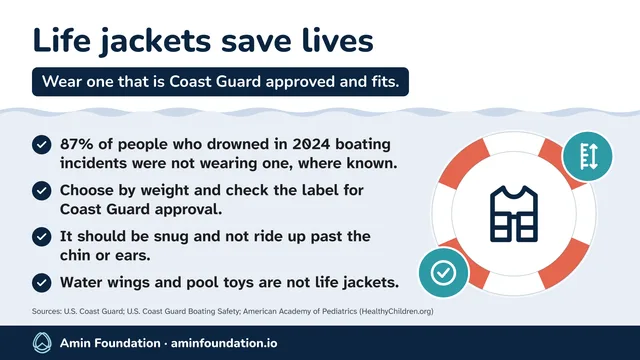
- Where life jacket use was known, 87% of people who drowned in 2024 boating incidents (opens in a new tab) weren't wearing one, according to the U.S. Coast Guard.
- Paddlecraft (canoes, kayaks and paddleboards) accounted for 26% of boating deaths in 2024.
- The CDC says life jackets reduce the risk of drowning while boating for people of all ages and swimming abilities (opens in a new tab), and that children should wear them for all activities in and around natural water.
91%
How loaner stations work
Washington State Parks runs one of the largest programs, and it's a useful model. Visitors can borrow an infant, youth or adult life jacket (opens in a new tab) for the day or weekend at no charge and return it to the same station. The state has more than 180 stations at marinas, launch sites and state parks, and works with the Washington Drowning Prevention Network.
The idea is simple: make the safe choice the easy one, right where people get into the water.
Where they help most
- Boat launches and marinas, where people head out in motorboats, canoes and kayaks.
- Paddling and fishing spots, including rental areas.
- Popular lake and river access points with no lifeguards.
Washington's program limits stations to water-access sites used for boating and paddling; sites mainly used for swimming aren't eligible. If you're thinking about a swimming beach, the better answer is usually lifeguards and a designated swim area.
Permissions and partners
You'll need the landowner's permission before you install anything.
- Find out who owns or manages the site: a state or local park, a town, a marina, a utility or a federal agency.
- Ask whether a program already exists. Many states run loaner programs through their parks or boating agency. In Washington, the state boating program provides life jackets in a variety of sizes and a durable sign (opens in a new tab) with fitting directions in English and Spanish, and replaces jackets as needed.
- Agree on responsibilities in writing. In Washington, hosts must provide the jackets to the public at no cost, maintain storage and signage, inspect jackets regularly and send an annual summary of approximate use.
- Ask your local fire department or marine unit for advice on placement.
Rules on liability, permits and placement vary by place. Ask the landowner and your local government; this isn't legal advice.
Choosing and fitting the jackets
- Coast Guard-approved, in every size. Stock infant, child and adult sizes. The Coast Guard says adult-size life jackets may not work for children (opens in a new tab).
- Foam, not inflatable, for the general public. The Coast Guard says inflatable life jackets are not appropriate for weak swimmers or non-swimmers.
- Infants and young children need a jacket with a collar for head support and a strap between the legs, sized to fit now, according to Water Safety USA (opens in a new tab).
- A fit sign. Post simple instructions at the station: a properly fitted foam life jacket is snug and doesn't ride up above the chin or ears, as the Coast Guard describes.
Our fit poster is ready to print and laminate for a station:
Printable
Does Your Life Jacket Fit?
A poster of the life jacket fit check: Coast Guard label, right weight, buckled, arms up, lift at the shoulders, plus rules for children and inflatables.
Visitors can also use our Life jacket finder to choose the right type before they arrive.
Maintenance and signage
A station is only as good as its upkeep. Based on Washington's host requirements:
Public rescue equipment
Some lakes, piers and pools also have public rescue equipment, such as ring buoys on posts or reaching poles. If you're asked about adding it, the principle is the same: permission, upkeep and clear signs.
Equipment like this supports the safest kind of bystander rescue. Minnesota DNR teaches people to reach with an object such as a rope or ladder, or to throw one end of a rope or something that will float (opens in a new tab), rather than going in. National Weather Service Tallahassee notes that even lifeguards only attempt a rip current rescue using a flotation device (opens in a new tab). Pair any equipment with a sign that says "Call 911" and gives the location name. Our guide to reach or throw, don't go explains how bystanders should use it.
What you can do today
Common questions
How does a life jacket loaner station work?
People borrow a life jacket from a public station for the day, wear it on the water and return it to the same place. Washington State Parks, for example, lets visitors borrow infant, youth or adult life jackets for the day or weekend at no charge, and has more than 180 stations.
How do I start a life jacket loaner station?
Talk to whoever owns or manages the site first, such as a park, marina or town. Ask your state boating agency or parks department whether it supplies jackets and signs. Then plan who will inspect the jackets, replace damaged ones, keep the sign up and track use.
Are loaner life jackets safe to use?
Check the one you borrow. It should be U.S. Coast Guard-approved, the right size and in good condition, with no rips, tears, holes or mold. The Coast Guard says a properly fitted foam life jacket is snug and doesn't ride up above the chin or ears.
Tools and printables for this guide
Interactive tool
Life jacket finder
Find the right life jacket size, style and label level by weight, age, swimming ability and activity, based on U.S. Coast Guard guidance, plus a fit check.
Printable
Does Your Life Jacket Fit?
A poster of the life jacket fit check: Coast Guard label, right weight, buckled, arms up, lift at the shoulders, plus rules for children and inflatables.
Sources
- Life Jacket Loaner Program (opens in a new tab) Washington State Parks
- As temps rise, officials implore recreators wear simple life-saving device (opens in a new tab) U.S. Army Corps of Engineers via DVIDS
- Recreational Boating Statistics 2024 (opens in a new tab) U.S. Coast Guard
- Life Jacket Wear / Wearing Your Life Jacket (opens in a new tab) U.S. Coast Guard Boating Safety
- Life Jackets Save Lives (opens in a new tab) Water Safety USA
- Preventing Drowning (opens in a new tab) CDC
- What if someone else falls in? (opens in a new tab) Minnesota Department of Natural Resources
- Gulf Coast Rip Current Awareness (opens in a new tab) National Weather Service Tallahassee
More in Community Water Safety
Vacation Water Safety: New Places, New Water
Plan a safer family trip near water: check the destination, pack life jackets, name Water Watchers, and learn the risks of lakes, beaches and pools abroad.
Vacation Rental Pool Safety: What to Check Before You Book
Booking a short-term rental with a pool or hot tub? What to ask the host, what to check on arrival, and what to do if the fence, gate or alarms aren't there.
Summer Camp Water Safety: Questions Parents Should Ask
What to ask a camp, day camp or child care program about swimming: swim tests, buddy checks, lifeguards, field trips and staff training, with New York rules.