
Lake Swimming Safety: Why Lakes Are Not Pools
Lakes are not pools: drop-offs, cold water, weeds and no lifeguard. A family plan for a lake day or lake house, with life jackets and a sober Water Watcher.
Why lakes, rivers, ponds and quarries are not pools, and how to swim, wade, jump, fish and camp safely in natural water, with checklists and sourced advice.
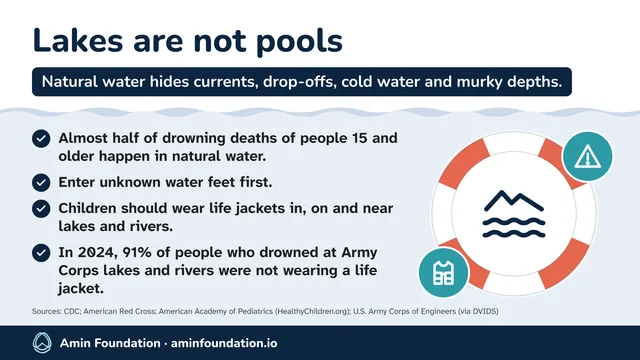
Lakes, rivers, ponds and quarries are not pools. The bottom can drop off without warning, the water is dark and often colder than it looks, currents can run through shallow water, and help is usually farther away. CDC reports that almost half of fatal drownings among people 15 and older happen in natural water such as lakes, rivers or oceans (opens in a new tab), and that children should wear life jackets for all activities in and around natural water (opens in a new tab).
None of this means staying away from the water. It means going with a plan. Start with lake swimming safety, the guide to read before a lake weekend or a lake-house trip. Then use the guides below for the kind of water you're visiting:
Every guide here cites its sources, so you can check the advice yourself. Three habits run through all of them: a properly fitted life jacket for every child and every weaker swimmer, one sober adult watching the water, and "reach or throw, don't go" if someone is in trouble. Cold water deserves its own attention, so see cold water and ice safety too.
Lakes are not pools: drop-offs, cold water, weeds and no lifeguard. A family plan for a lake day or lake house, with life jackets and a sober Water Watcher.
Why moving water is so dangerous, what strainers and undercut rocks are, how fast rivers rise after rain, and what to do if the current sweeps you away.
How to pick a safe outdoor swimming spot: designated areas, lifeguard hours, signs and water quality, plus a quick check before anyone gets in.
Why diving into lakes, rivers and swimming holes causes spinal cord injuries, why feet first is the rule, and the cold-water gasp after a jump.
How alcohol raises drowning risk for swimmers, boaters and the adults watching children, with CDC figures, and how to plan a sober Water Watcher.
Why quarries, ponds and reservoirs are riskier than they look: deep cold water, hidden ledges, steep banks, no lifeguard, and safer places to swim.
How electricity leaking from docks and boats can paralyze swimmers, where it happens, what tingling in the water means, and how to help without going in.
Why anglers fall in and drown, and how to fish safely from shorelines, docks, waders and small boats, with life jacket advice for adults and children.
Is the lake, river or beach clean enough to swim in? What harmful algal blooms look like, where to find advisories, and why to wait after rain.
How a low-head dam's recirculating current traps people, how to spot one from the water or shore, and why bystanders should call 911 and throw, never go in.
Why pool skills don't fully carry over to lakes and the ocean, the five water competency skills to master first, and how to build confidence.
Staying safe at swimming holes, creeks and waterfalls far from lifeguards: slippery rocks, fast-rising water, kids at camp and sharing your plan.
Interactive tool
Check a vacation rental pool before you book, and get ready for lakes and beaches: fences, drain covers, life jackets, flags and lifeguards.
Interactive tool
Find the right life jacket size, style and label level by weight, age, swimming ability and activity, based on U.S. Coast Guard guidance, plus a fit check.
Printable
A one-page checklist for lake, river and pond days: where to swim, life jackets, feet-first entry, currents, alcohol, storms and getting help.
Interactive tool
Check yourself or your child against the five Red Cross water competency skills, see what to practise next, and review water smarts and safe helping.