
Cold Water Shock and the 1-10-1 Rule
What cold water shock does to your breathing and heart, why it drowns strong swimmers, and what the 1-10-1 rule means and where it falls short.
Why cold water drowns strong swimmers, what the 1-10-1 rule really means, how thick ice needs to be, and what to do if you or someone else falls in.
Cold water can be deadly even for strong swimmers, because the first minutes are about breathing, not swimming. The National Weather Service says sudden immersion can trigger gasping and rapid breathing in water as warm as 77°F (opens in a new tab), and that cold shock can be just as severe in 50-60°F water as in 35°F water (opens in a new tab). The National Center for Cold Water Safety advises treating any water below 70°F with caution (opens in a new tab).
Start with cold water shock and the 1-10-1 rule. It explains what happens in your body, why the 1-10-1 timings are only approximate, and the two habits that matter most: wear a life jacket, and dress for the water temperature, not the air. Then learn the steps for falling into cold water, so you have a plan before you ever need one.
For winter, read how thick ice needs to be and what to do if you fall through ice. The rule for helping someone else is the same everywhere: call 911, then reach or throw from shore, and don't go out after them. After any cold-water fall, watch for the signs of hypothermia.
Planning to be on the water in spring or fall? See cold-water paddling and early-season boating. Thinking about a New Year's dip? Read polar plunge safety first. For lakes and rivers in warmer months, see lakes, rivers and open water.
What cold water shock does to your breathing and heart, why it drowns strong swimmers, and what the 1-10-1 rule means and where it falls short.
How to survive a sudden fall into cold water: keep your head up, get your breathing under control, get out or onto something that floats, or use H.E.L.P.
Official ice thickness guidelines, why no ice is ever 100% safe, clear vs. white ice, where ice is weakest, and NYC Parks' rule on frozen ponds.
Step-by-step self-rescue if you fall through ice, why ice picks matter, and how to help someone else from shore without walking out onto the ice yourself.
How to recognize hypothermia after a fall into cold water, what to do while you wait for help, and the warming mistakes to avoid, from CDC, NWS and Red Cross.
Paddle or boat safely in spring, fall and winter: check the water temperature, dress for a fall in, keep your life jacket on and go with others.
Why polar plunges and cold dips carry real risk, how to take part more safely, and who should check with a doctor before a cold-water plunge.
Interactive tool
Enter a water temperature to see the cold water risk, and learn the 1-10-1 memory aid with the National Center for Cold Water Safety’s caution.
Printable
A poster on cold water shock: why water below 70°F needs caution, what to wear, what to do if you fall in, and how to help someone from shore.
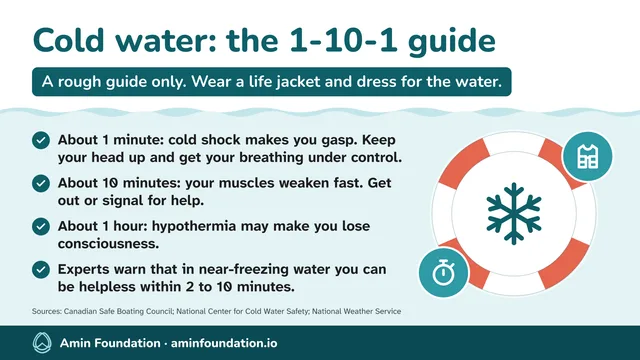
Infographic
A rough guide only. Wear a life jacket and dress for the water.
Printable
A poster of the safe way to help someone in trouble in the water: shout and call 911, reach from solid ground, throw something that floats, and don't go in.