What Drowning Looks Like: The Quiet Signs
Drowning is usually quiet and fast. Learn the real signs of drowning in children and adults, how distress differs from drowning, and what to do right away.
How to recognize drowning, help without going in, call 911 and learn CPR, plus the truth about 'dry drowning' and what to do after a scare in the water.
Emergency
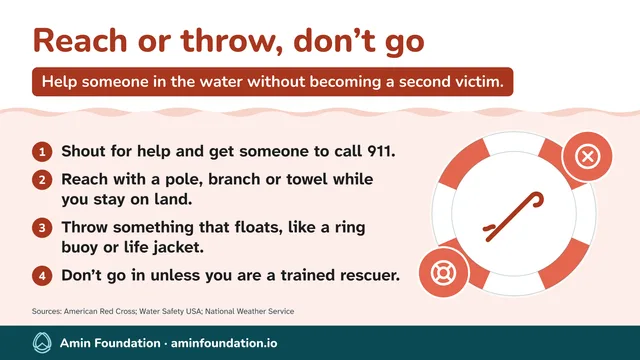
Call 911 in any water emergency. Shout for help, then reach or throw something that floats. Don't go in.
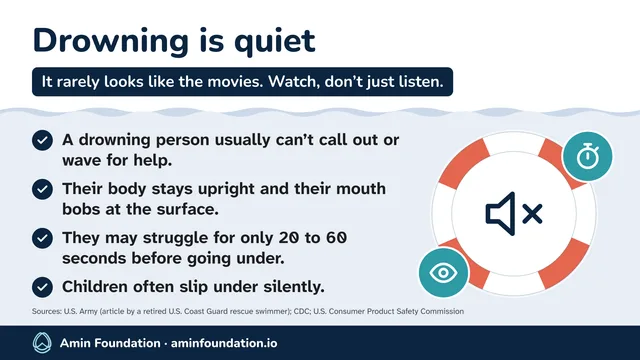
Drowning is quiet and fast. The CDC says it happens in seconds and is often silent (opens in a new tab), and a person who is drowning usually can't shout or wave. Knowing what to look for, and what to do in the first minutes, can save a life.
The American Red Cross teaches a simple order of action, its chain of drowning survival (opens in a new tab): recognize trouble and shout for help, get the person out without putting yourself in danger, call emergency services, begin rescue breathing and CPR, and use an AED if one is available. The guides below walk through each link in that chain:
We don't print CPR steps. CPR is a hands-on skill that differs for adults, children and babies, so we explain why it matters and point you to American Heart Association and Red Cross training instead.
Our founding family's mission includes "the need for proper training and equipment for emergency response personnel." Read what professional rescuers need, and how communities can support them, in what water rescue teams need.
Drowning is usually quiet and fast. Learn the real signs of drowning in children and adults, how distress differs from drowning, and what to do right away.
How to help a drowning person without becoming a second victim: call 911, reach with a pole or rope, throw something that floats, and don't go in.
What to do in a drowning emergency: call 911, get the person out without going in, start CPR if trained, and get medical care for anyone who had trouble.
Where to find CPR classes from the Red Cross and American Heart Association, free FDNY classes in NYC, and why drowning calls for CPR with rescue breaths.
'Dry drowning' and 'secondary drowning' aren't medical terms. Learn which symptoms after a water incident need medical care, and when a child is fine.
How to call 911 from a beach, lake, park or pool: what to say first, how to give a location without an address, NYC text-to-911 and teaching kids to call.
How to use rescue equipment at pools, docks and beaches: throw bags, ring buoys and reaching poles, what to throw if there's none, and pulling someone in.
After a near drowning or a scare in the water: how to check your child's health, talk about it, rebuild their confidence and know when to get more help.
Write a simple water emergency action plan for a home pool, camp, school trip or event: who calls 911, who reaches, who meets responders, and drills.
Do drowning people yell for help? Can you drown in shallow water? Common drowning myths, each answered with facts from the CDC, AAP, Red Cross and CPSC.
Interactive tool
Myth or fact? Test 14 common beliefs about drowning, from floaties to dry drowning, with every answer checked against official sources.
Printable
A poster of the quiet signs of drowning for pools, beaches, camps and classrooms, with what to do: call 911, reach or throw, don't go in.
Printable
A cut-out card to pass between adults at the pool, beach or lake: whoever holds it watches the water, with no phone and no other job, for 15-20 minutes.
Printable
A poster of the safe way to help someone in trouble in the water: shout and call 911, reach from solid ground, throw something that floats, and don't go in.