How to Choose the Right Life Jacket
Pick a life jacket that suits the wearer and the activity: Coast Guard approval, the right style for boating, paddling or fishing, sizing and comfort.
Choosing and fitting life jackets, kids' sizes, kayaking and paddleboarding, falls overboard and boating courses, built on U.S. Coast Guard guidance.
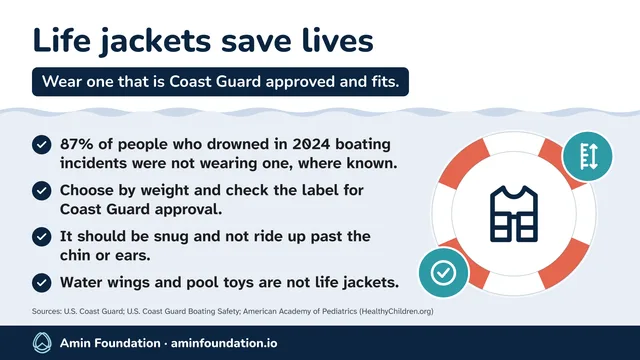
A life jacket only works if it is worn, fits and suits the activity. That one habit matters more than anything else on the water. In 2024, the U.S. Coast Guard found that where life jacket use was known, 87% of people who drowned in boating incidents were not wearing one (opens in a new tab). The Coast Guard's own advice is simple: the best USCG Approved lifejacket or buoyancy aid is the one you will wear (opens in a new tab).
Start with the life jacket guides:
Then the boating basics. Paddlers face real risk: canoes, kayaks and paddleboards accounted for 26% of U.S. boating deaths in 2024 (opens in a new tab). Our guides cover kayak and canoe safety, paddleboard safety, what to do if you fall off a boat, float plans and the dangers of boating under the influence. Before every trip, run the boating safety checklist.
Boating in New York? The state's Brianna's Law requires a state-approved safety course for all operators of motorized boats. Read boating safety courses in New York for who needs one and where to find free classes. For other states, the Coast Guard points boaters to NASBLA's state boating contacts (opens in a new tab), so check your own state's rules.
Pick a life jacket that suits the wearer and the activity: Coast Guard approval, the right style for boating, paddling or fishing, sizing and comfort.
A life jacket should be snug and stay below the chin when lifted. The Coast Guard's five-step fit test, an in-water check, and signs a jacket is worn out.
Choose and use life jackets for babies and children: Coast Guard weight sizes, head support and leg straps, the under-13 rule on boats, and how to keep it on.
Water wings, floaties and inflatable rings are toys, not safety devices. How to tell a toy from a Coast Guard-approved life jacket, and what kids need.
A pre-departure boating checklist: life jackets for all, weather, a float plan, Coast Guard-required gear, the engine cut-off switch and a passenger briefing.
Paddle a kayak or canoe safely: wear a life jacket every time, check weather and water temperature, know what to do if you capsize, and take a class.
New York's Brianna's Law requires a state-approved safety course for all operators of motorized boats. Who it covers, how to take one, and free options.
Why alcohol and drugs make boating so dangerous for operators and passengers, what the Coast Guard's numbers show, and how to plan a sober skipper.
A float plan tells someone on shore where you're going and when you'll be back, so rescuers know where to look. What to include and when to call for help.
How inflatable life jackets work, manual vs automatic styles, why they're not for children under 16 or non-swimmers, and how to check and rearm one.
How to read a life jacket label: Coast Guard approval, the new performance Levels (50 to 275), the old Type I to V system, turning ability and use limits.
Paddleboard safely: why the Coast Guard counts a SUP as a vessel, wearing a life jacket, the right leash for still or moving water, cold water and kids.
Survive a fall from a boat and help someone who falls in: head up, life jacket on, stop the boat, throw something that floats, and wear the cut-off switch.
Interactive tool
Find the right life jacket size, style and label level by weight, age, swimming ability and activity, based on U.S. Coast Guard guidance, plus a fit check.
Printable
A one-page checklist before you leave the dock: a life jacket that fits for everyone, kids under 13, a float plan, the weather, cold water and no alcohol.
Printable
A poster of the life jacket fit check: Coast Guard label, right weight, buckled, arms up, lift at the shoulders, plus rules for children and inflatables.