
Rip Currents: How to Spot One and How to Escape
What a rip current is, how to spot one from the sand, and what to do if one pulls you out, in the words of the National Weather Service and NOAA.
Rip currents, beach flags, lifeguards, waves and a plan for every beach day, built on National Weather Service, NOAA and Red Cross advice.
Beach safety comes down to three things: rip currents, lifeguards and a plan. The National Weather Service (NWS) puts the most important rule first: only swim at a beach with lifeguards (opens in a new tab). It quotes the U.S. Lifesaving Association: the chance of drowning at a beach with lifeguards is 1 in 18 million.
The biggest danger in the water is the rip current, a narrow channel of fast water flowing away from shore. NOAA estimates rip currents kill about 100 people in the U.S. each year (opens in a new tab). They often form on calm, sunny days. The good news is that you can learn to spot one, and to escape: relax and float, don't fight it, and swim along the shoreline before angling back in.
Start with the guides below. Then practice with our free tools before your trip:
Before every beach day: check the NWS beach forecast (opens in a new tab), choose a guarded beach, talk to the lifeguard, name one adult as the Water Watcher, and put Coast Guard-approved life jackets on children. Our family beach safety checklist has the full list, ready to print.
If someone is in trouble, don't swim out after them. Get a lifeguard or call 911, and throw something that floats. Read how to help someone caught in a rip current.
In New York City? Our NYC beach safety guide covers lifeguard hours, closed sections and water-quality signs at Rockaway, Coney Island, Orchard Beach and the city's other public beaches, plus the National Park beaches nearby.
What a rip current is, how to spot one from the sand, and what to do if one pulls you out, in the words of the National Weather Service and NOAA.
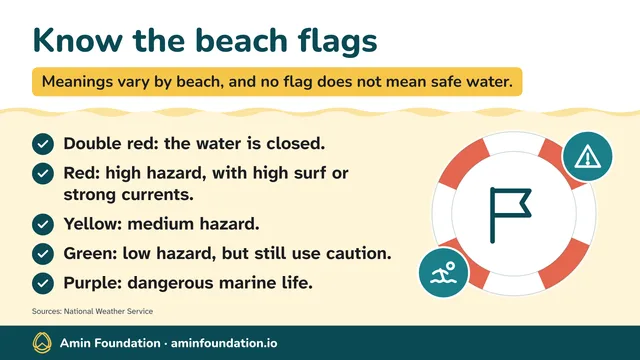
What red, double red, yellow, green and purple beach flags usually mean, why flag systems vary from beach to beach, and why no flag never means safe water.
A family beach day checklist: check the forecast, choose a guarded beach, pick a meeting spot, name a Water Watcher, pack life jackets, and know what to do.
Someone is caught in a rip current. Get a lifeguard, call 911, tell them to swim along the shore and throw something that floats. Don't swim out yourself.
Why a lifeguarded beach is the safest place to swim in open water, how to get the most from lifeguards, and what to do when no lifeguard is on duty.
Swim safely at New York City's public beaches: the season, lifeguard hours, closed sections, water quality signs, rip currents and National Park beaches.
Why rip currents form beside jetties, groins and piers even on calm days, why the Red Cross says swim 100 feet away, and how to stay safe on the rocks.
Beyond rip currents: how shore break causes neck injuries, why waders get knocked over, what sandbars really do, and how to bodyboard or try surfing safely.
Simple beach rules kids can remember, flags, lifeguards and rip currents explained in kid language, a float-and-wave practice, and free games and lessons.
How to keep a child from getting lost on a crowded beach, what to teach them, and what to do if they go missing: check the water first, tell a lifeguard.
Interactive tool
What do red, yellow, green, purple and double red beach flags mean? Tap a flag for its meaning and what to do, then test yourself with a practice round.
Interactive tool
Check a vacation rental pool before you book, and get ready for lakes and beaches: fences, drain covers, life jackets, flags and lifeguards.
Printable
A one-page beach checklist: swim near a lifeguard, read the flags, spot rip currents, stay away from piers and jetties, and know how to escape and help.
Printable
A poster of what beach warning flag colors usually mean, from double red to purple, with the reminder that flags vary by beach and no flag doesn't mean safe.
Printable
A poster of the safe way to help someone in trouble in the water: shout and call 911, reach from solid ground, throw something that floats, and don't go in.