
Decode the flags

Private: what you enter stays on this device.

This is the printable version. Turn on JavaScript to use the interactive tool.

  • Double red flags: Water closed

    The water is closed to the public.

    What to do: Stay out of the water. The National Weather Service warns you could be arrested or fined for going in.

  • Red flag: High hazard

    High surf and/or strong currents. Dangerous rip currents are expected, stronger and more often.

    What to do: The National Weather Service recommends staying out of the water.

  • Yellow flag: Medium hazard

    Moderate surf and/or currents. Some rip currents are expected.

    What to do: Be cautious if you go in, never swim alone, swim near a lifeguard, and know what to do if a rip current pulls you.

  • Green flag: Low hazard

    Calm conditions.

    What to do: Low hazard does not mean no hazard. Stay cautious, watch children closely and swim near a lifeguard.

  • Purple flag: Dangerous marine life

    Dangerous marine life is in the water, such as jellyfish. It can fly along with the other flags.

    What to do: Ask the lifeguard what has been seen, and decide with that in mind. It is not a rip current warning.

  • No flags flying: No information

    No flags does not mean the water is safe. Many beaches do not use flags at all.

    What to do: Read the signs at the beach entrance, check the local beach forecast, and swim only near a lifeguard.
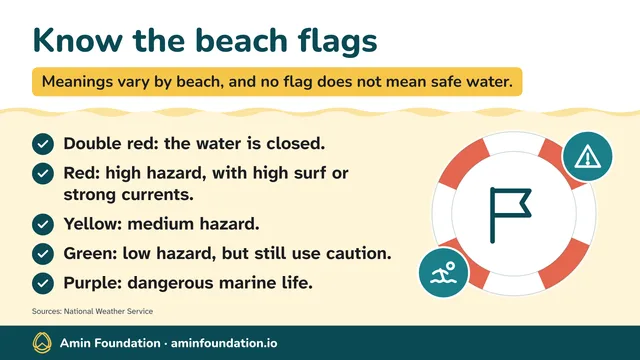

What beach warning flags mean

Many U.S. beaches fly colored flags to warn swimmers about the water that day. The National Weather Service describes the most common system like this (NWS Tallahassee (opens in a new tab)):

  • Double red: the water is closed to the public. You could be arrested or fined for going in.
  • Red: high hazard, with high surf and/or strong currents. The NWS recommends staying out of the water (opens in a new tab), because dangerous rip currents are expected, stronger and more often.
  • Yellow: medium hazard, with moderate surf and/or currents. Be cautious if you go in, don't swim alone, and know what to do if you are caught in a rip current.
  • Green: low hazard with calm conditions, but it's still wise to be careful.
  • Purple: dangerous marine life, such as jellyfish. It can fly alongside the other flags and is not a rip current warning.

No flag is not a green flag

The National Weather Service says the absence of flags does not mean the water is safe (opens in a new tab). Flags are not used at every beach, and their meaning can vary from place to place (opens in a new tab). That is why the first step at any beach is to read the safety signs at the entrance, then look for flags near the lifeguard stand, and ask the lifeguard if anything is unclear.

Rip currents are the main reason flags go up. NOAA says rip currents can move at up to 8 feet per second (opens in a new tab), faster than an Olympic swimmer, and estimates that about 100 people are killed by rip currents in the U.S. each year. They also form on calm, sunny days, so good weather is not a safety signal.

The best protection: a lifeguard

The National Weather Service cites the U.S. Lifesaving Association's estimate that the chance of drowning at a beach with lifeguards on duty is 1 in 18 million (opens in a new tab). Swim near a lifeguard, check the beach forecast before you go, and keep young children within arm's reach even when the flag is green.

How to use this tool

Tap or select any flag to see what it means and what to do. Then try the practice round: you'll see a flag and choose what it means, with the answer explained each time. Practising before a trip helps children remember the colors. Nothing you choose leaves this device.

For more, read beach warning flags: what each color means, how to spot and escape a rip current and why swimming near a lifeguard matters.

What you can do today

  1. Go through the flags with your family and do the practice round together.
  2. Before your next beach day, check the National Weather Service surf zone forecast.
  3. Learn what to do in a rip current with the rip current trainer.

Printables, infographics and games

Printable

Beach Warning Flags

A poster of what beach warning flag colors usually mean, from double red to purple, with the reminder that flags vary by beach and no flag doesn't mean safe.

Printable

Beach Safety Checklist for Families

A one-page beach checklist: swim near a lifeguard, read the flags, spot rip currents, stay away from piers and jetties, and know how to escape and help.

Infographic

Know the beach flags

Meanings vary by beach, and no flag does not mean safe water.

Kids’ game

Beach Flag Match

Learn what the beach flag colors mean.

More tools: beaches, lakes, boats and cold water

Sources

  1. Gulf Coast Rip Current Awareness (opens in a new tab) National Weather Service (Tallahassee)
  2. Florida’s Beach Warning Flag Program (opens in a new tab) National Weather Service (Tallahassee)
  3. Know Before You Go in the Water (opens in a new tab) National Weather Service
  4. What Is a Rip Current? (opens in a new tab) NOAA National Ocean Service
  5. How to Avoid Getting Caught in a Rip Current (opens in a new tab) National Weather Service

Updated