
Beach Warning Flags: What Each Color Means
What red, double red, yellow, green and purple beach flags usually mean, why flag systems vary from beach to beach, and why no flag never means safe water.
Key takeaways
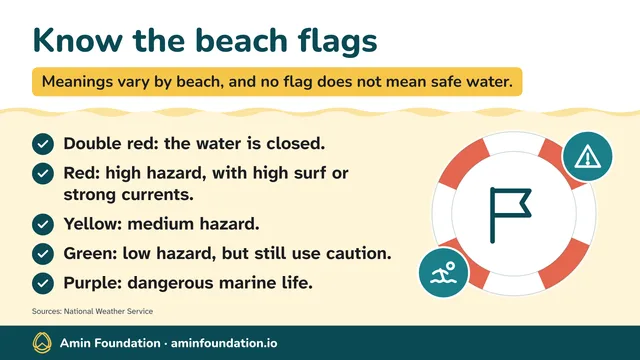
- Double red means the water is closed. Red means high hazard. Yellow means medium hazard. Green means low hazard, but still take care. Purple means dangerous marine life.
- Flags aren't used at every beach, and their meaning can change from place to place. Read the sign at the entrance.
- No flag flying does not mean the water is safe.
- Flags don't replace a lifeguard. Ask the lifeguard what the flag means today and swim where they can see you.
On beaches that use the common warning flag system, double red means the water is closed, red means high hazard, yellow means medium hazard, green means low hazard (but still take care) and purple means dangerous marine life. Flag systems are not the same everywhere, so always read the sign at the beach entrance and ask the lifeguard what today's flag means.
Flags are a quick way for lifeguards to tell a whole beach what the water is doing. This guide explains the common colors, where they differ, and how to use them with the forecast and the lifeguard.
The common flag colors
The National Weather Service (NWS) office in Tallahassee, Florida, describes the flags used along its stretch of the Gulf Coast. These are the colors most U.S. visitors will see:
| Flag | What it usually means | What to do |
|---|---|---|
| Two red flags | The water is closed. | Stay out of the water. |
| One red flag | High hazard: high surf and/or strong currents. | Stay out, or follow the lifeguard's directions. |
| Yellow | Medium hazard: moderate surf and/or currents. | Weaker swimmers and kids stay close to shore, near a lifeguard. |
| Green | Low hazard, calm conditions. | Swim near a lifeguard and still take care. |
| Purple | Dangerous marine life. | Ask the lifeguard what has been seen. |
Source: NWS Tallahassee, Rip Current Awareness (opens in a new tab).
Interactive tool
Beach warning flags decoder
What do red, yellow, green, purple and double red beach flags mean? Tap a flag for its meaning and what to do, then test yourself with a practice round.
Red and double red
Double red. The NWS says double red flags mean the water is closed and you could be arrested or fined (opens in a new tab) for entering the water. This is not a suggestion. Stay on the sand.
Single red. The NWS says a single red flag means a high hazard with high surf and/or strong currents (opens in a new tab). What a single red flag allows can differ from beach to beach, so ask the lifeguard. If you're unsure, stay out.
Red flags can also mean something more specific at some beaches:
- NYC Parks beaches: closed sections are marked with signs and/or red flags (opens in a new tab), and swimming is not allowed in them.
- Gateway National Recreation Area (including Jacob Riis Park in Queens and Great Kills Park on Staten Island): the National Park Service says red flags mean no lifeguards on duty and no swimming or wading (opens in a new tab).
Yellow, green and purple
Yellow. The NWS says a yellow flag means a medium hazard with moderate surf and/or currents (opens in a new tab). Keep children within arm's reach and stay where the lifeguard can see you.
Green. The NWS says a green flag means a low hazard with calm conditions, but it's still wise to exercise caution (opens in a new tab). Green is not a promise. The NWS forecast offices say that even when the rip current risk is low, life threatening rip currents often occur in the vicinity of groins, jetties, reefs, and piers (opens in a new tab).
Purple. The NWS says a purple flag will sometimes fly with the other flags (opens in a new tab) and means dangerous marine life is in the water. A purple flag can fly next to a green or yellow one.
Warning
No flag is not a green flag. The NWS says the absence of flags does not assure safe waters (opens in a new tab).
Why flags vary by beach
The NWS is clear that warning flags aren't used in all areas and their meaning can vary from area to area (opens in a new tab). So before you trust a color:
Conditions also change during the day. The NWS says rip currents on many beaches often flow faster about an hour or two on either side of low tide (opens in a new tab), and that hurricanes that are far away can still create deadly rip currents and waves (opens in a new tab). Look at the flag every time you go back in the water.
Flags don't replace a lifeguard's advice
A flag is a summary. A lifeguard can tell you the details: where the rip currents are today, which section is calmest, and whether the tide is about to change things.
- The NWS says to check the beach forecast before you leave and talk to the lifeguard at the beach (opens in a new tab).
- The Red Cross says to check whether any warning flags are up (opens in a new tab) and ask a lifeguard about water and beach conditions.
- The NWS beach forecast advice for every rip current risk level ends the same way: always swim near a lifeguard and remember to heed the advice of the local beach patrol and flag warning systems (opens in a new tab).
Flags also don't tell you about you. A yellow-flag day might be fine for a strong ocean swimmer and dangerous for a child who has only swum in pools. Read more in why swimming near a lifeguard matters and how to spot and escape a rip current.
Teach kids the colors
Turn flags into a game on the drive to the beach: "Red means?" "Stay out!" Our guide to teaching kids ocean safety has more ideas, and the Beach Flag Match game on our kids' site lets them practice.
What you can do today
- Try the Beach warning flags decoder decoder so the colors are familiar before your trip.
- Print the Beach Warning Flags and keep it in the car or beach bag.
- Look up your beach's own flag key on its official website before you go. If you're in New York City, start with NYC beach safety.
- Add "check the flag" to your beach routine, along with the forecast and a word with the lifeguard. Our family beach safety checklist has the full list.
Common questions
What does a double red flag mean at the beach?
Where the common flag system is used, two red flags mean the water is closed to the public. The National Weather Service office in Tallahassee says you could be arrested or fined for entering the water under these conditions. Stay on the sand.
What does a yellow flag mean at the beach?
A yellow flag usually means a medium hazard, with moderate surf and/or currents. Weaker swimmers, young children and anyone unsure of their skills should stay out or stay very close to shore, near a lifeguard.
What does a purple flag mean?
A purple flag is sometimes flown with the other flags to warn of dangerous marine life in the water. It can fly alongside a green or yellow flag. Ask the lifeguard what has been seen and where.
Is it safe to swim if no flag is flying?
Not necessarily. The National Weather Service says the absence of flags does not assure safe waters. Check the beach forecast, read the posted signs and talk to a lifeguard. If no lifeguard is on duty, don't swim.
What do red flags mean at New York City beaches?
NYC Parks says closed sections of its beaches are marked with signs and/or red flags, and swimming is not allowed there. At Gateway National Recreation Area beaches, the National Park Service says red flags mean no lifeguards on duty and no swimming or wading.
Tools and printables for this guide
Interactive tool
Beach warning flags decoder
What do red, yellow, green, purple and double red beach flags mean? Tap a flag for its meaning and what to do, then test yourself with a practice round.
Printable
Beach Warning Flags
A poster of what beach warning flag colors usually mean, from double red to purple, with the reminder that flags vary by beach and no flag doesn't mean safe.

Sources
- Rip Current Awareness (opens in a new tab) National Weather Service Tallahassee
- Know BEFORE you go in the water! (opens in a new tab) National Weather Service
- How to Avoid Getting Caught in a Rip Current (opens in a new tab) National Weather Service
- NWS Offices Issuing Surf Zone Forecasts (opens in a new tab) National Weather Service
- Beaches (opens in a new tab) NYC Parks
- Beaches at Gateway National Recreation Area (opens in a new tab) National Park Service
- NYC Beaches (opens in a new tab) NYC Health Department
- Beach & Ocean Safety Tips (opens in a new tab) City of Jacksonville Beach, Florida (Ocean Rescue)
- Beach and Ocean Safety (opens in a new tab) American Red Cross
- Rip Current Science (opens in a new tab) National Weather Service
- Social Media: Rip Currents & Beach Hazards (opens in a new tab) National Weather Service
More in Beach and Ocean Safety
How to Help Someone Caught in a Rip Current
Someone is caught in a rip current. Get a lifeguard, call 911, tell them to swim along the shore and throw something that floats. Don't swim out yourself.
Jetties and Piers: Why Swimming Near Them Is Risky
Why rip currents form beside jetties, groins and piers even on calm days, why the Red Cross says swim 100 feet away, and how to stay safe on the rocks.
Shore Break, Big Waves and Sandbars: Hidden Beach Hazards
Beyond rip currents: how shore break causes neck injuries, why waders get knocked over, what sandbars really do, and how to bodyboard or try surfing safely.