
Free tool · Plan and supervise
Vacation water safety check
New places mean new water. Check the rental before you book, pack what you need, and walk the property when you arrive.
Check your trip
Private: what you enter stays on this device.
This is the printable version. Turn on JavaScript to use the interactive tool.
Before you book a place with a pool or hot tub
Ask the host, or check the listing photos.
Before you go
When you arrive
At a lake or river
At the beach
Everywhere
New places mean new water
Vacations are meant to be easy, but they put families next to water they don't know: a rental's backyard pool, a lake with a drop-off, a beach with currents. The routines that keep children safe at home can slip when everyone is excited, the house is unfamiliar and there are more adults, each thinking someone else is watching.
Rental pools are a real risk. The CPSC's Pool Safely campaign knows of at least 64 pool drownings of children under 15 in vacation rental homes since 2021 (opens in a new tab), 54 of them fatal. Vacation rentals don't have lifeguards.
Before you book
Pool Safely suggests checking a rental before you book for self-latching gates, pool door alarms and non-climbable four-sided fencing, and for raised drain covers that prevent entrapment. Ask the host directly if the listing doesn't say. The American Academy of Pediatrics reminds families to look for water hazards wherever you stay (opens in a new tab), including relatives' homes and places you visit on trips.
Lakes are not pools
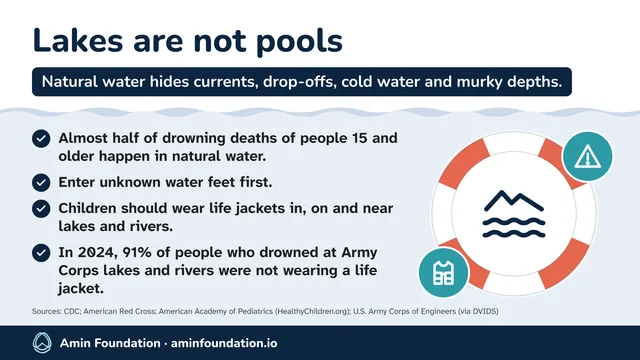
Natural water hides hazards that pools don't have. The CDC says almost half of fatal drownings among people 15 and older happen in natural water (opens in a new tab) such as lakes, rivers or oceans. The U.S. Army Corps of Engineers reminds swimmers that natural water is different from a pool and that swimming ability declines with age; at Corps lakes and rivers in 2024, 91% of people who drowned were not wearing life jackets (opens in a new tab). The American Red Cross (opens in a new tab) says to enter unknown or shallow water feet first, to dive only where it is marked safe and at least 9 feet deep, and to watch for fast currents (even in shallow water), dams, underwater obstacles and sudden drop-offs.
At the beach
Before you go, check the National Weather Service surf zone forecast (opens in a new tab) and beach advisories, or ask your hotel or rental agency where to find them. At the beach, read the signs at the entrance and the warning flags, which aren't used everywhere and can mean different things in different places. Swim only near a lifeguard, and make sure everyone knows the rip current steps (opens in a new tab): relax, swim along the shore to get out, float if you can't, and wave and yell for help.
How this check works
The check is a list in five parts: before you book, before you go, when you arrive, at a lake or river, and at the beach. Answer each item Yes, Not yet or Doesn't apply, then press See my to-do list for a printable list of what's left, with the source for each item. Your answers are saved only on this device.
Read more in vacation water safety, vacation rental pool safety and why lakes are not pools.
What you can do today
- Ask your host the four Pool Safely questions before you pay.
- Pack fitted, Coast Guard-approved life jackets for children and weak swimmers.
- On the first day, walk the property together and agree who is the Water Watcher. Among teens and adults, the CDC says alcohol is involved in up to 70% of deaths linked to water recreation, so whoever is watching stays sober.
Printables, infographics and games
Printable
Vacation Rental Checklist
A one-page checklist for rental homes with a pool, hot tub, lake or beach: what to ask before you book, what to check on arrival, and daily habits.
Printable
Lake, River and Open Water Safety Checklist
A one-page checklist for lake, river and pond days: where to swim, life jackets, feet-first entry, currents, alcohol, storms and getting help.
Printable
Beach Safety Checklist for Families
A one-page beach checklist: swim near a lifeguard, read the flags, spot rip currents, stay away from piers and jetties, and know how to escape and help.
Related guides
- Vacation Water Safety: New Places, New Water
Plan a safer family trip near water: check the destination, pack life jackets, name Water Watchers, and learn the risks of lakes, beaches and pools abroad.
- Vacation Rental Pool Safety: What to Check Before You Book
Booking a short-term rental with a pool or hot tub? What to ask the host, what to check on arrival, and what to do if the fence, gate or alarms aren't there.
- Lake Swimming Safety: Why Lakes Are Not Pools
Lakes are not pools: drop-offs, cold water, weeds and no lifeguard. A family plan for a lake day or lake house, with life jackets and a sober Water Watcher.
- Choosing a Safe Place to Swim Outdoors
How to pick a safe outdoor swimming spot: designated areas, lifeguard hours, signs and water quality, plus a quick check before anyone gets in.
- Beach Safety Checklist for Families
A family beach day checklist: check the forecast, choose a guarded beach, pick a meeting spot, name a Water Watcher, pack life jackets, and know what to do.
More tools: plan and supervise
Sources
- Know Before You Go: Pool Safety and Vacation Rentals (opens in a new tab) Pool Safely (U.S. Consumer Product Safety Commission)
- Drowning Prevention for Curious Toddlers (opens in a new tab) American Academy of Pediatrics (HealthyChildren.org)
- Risk Factors for Drowning (opens in a new tab) CDC
- As temps rise, officials implore recreators to wear simple life-saving device (opens in a new tab) U.S. Army Corps of Engineers (via DVIDS)
- Lake, River & Stream Safety (opens in a new tab) American Red Cross
- Know Before You Go in the Water (opens in a new tab) National Weather Service
- Rip Currents & Beach Hazards (opens in a new tab) National Weather Service
Updated