Check the water temperature
Private: what you enter stays on this device.
This is the printable version. Turn on JavaScript to use the interactive tool.
What the water temperature means
| Water | What it means |
|---|---|
| 77°F (25°C) and warmer | Warm water. The NCCWS puts pool water at 77-82°F (25-28°C); below 77°F the cold starts to affect breathing. Warm water can still be dangerous: wear a life jacket on boats and watch swimmers closely. |
| 70 to 76°F (21 to 24°C) | Cool: breathing can be affected. The NCCWS says that below 77°F (25°C) breathing is affected, and the National Weather Service says gasping can start in water as warm as 77°F. |
| 60 to 69°F (15.5 to 20.5°C) | Cold water: treat it with caution. The NCCWS says to treat any water below 70°F (21°C) with caution and to wear thermal protection, such as a wetsuit or drysuit, below that level. |
| 50 to 59°F (10 to 15°C) | Strongest cold shock range. The NCCWS calls 50-60°F (10-15.5°C) the maximum-intensity cold shock range: a complete loss of breathing control and swimming failure. Below 60°F an average person can hold their breath only about one-third as long as in warmer water. |
| Below 50°F (10°C) | Very cold water. The National Weather Service says cold shock can be just as severe in 50-60°F water as in 35°F water. In near-freezing water, the NCCWS notes, a person can lose the use of their arms and legs within 2 to 10 minutes. |
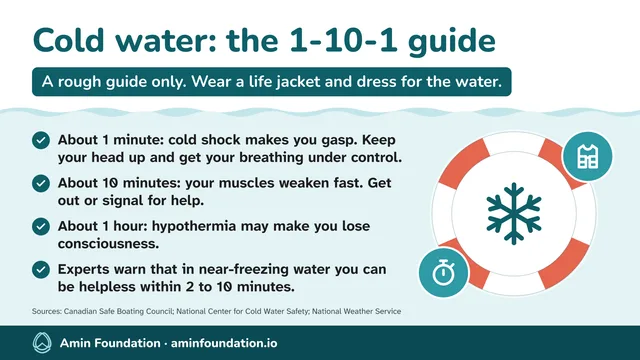
The 1-10-1, with the caution
- 1 minute: Cold shock
A sudden, deep gasp, then very fast breathing. Keep your airway clear and get your breathing under control. A life jacket is critically important now.
The caution: The NCCWS says cold shock can kill within seconds to two minutes, and that many people cannot control their breathing for much longer than one minute.
- 10 minutes: Cold incapacitation
Fingers, arms and legs stop working well enough for meaningful movement. Try to get out early. If you can’t, keep your airway clear while you wait for rescue.
The caution: Strength fades steadily, not all at once at 10 minutes. In near-freezing water it can be gone within 2 to 10 minutes. Swimming even 6 to 10 feet while gasping is often impossible, even for good swimmers.
- 1 hour: Hypothermia
Even in ice water it may take about an hour to pass out from hypothermia.
The caution: The NCCWS calls the 1-10-1 a myth: the times are not promises, and the danger comes much sooner than an hour. Minnesota records show only 5 of 269 ice-related deaths since 1976 were from hypothermia; most people drowned.
Five rules from the National Center for Cold Water Safety
- Wear your life jacket (PFD).
- Dress for the water temperature (not the air temperature).
- Field test your gear.
- Swim test your gear.
- Plan for the worst that can happen.