
Check the five skills

Private: what you enter stays on this device.

This is the printable version. Turn on JavaScript to use the interactive tool.

The five swimming skills

Water smarts

  • Know your limits, including fitness and medical conditions.
  • Never swim alone: swim with a lifeguard or a water watcher present.
  • Wear a U.S. Coast Guard-approved life jacket when boating, whatever your swimming skill.
  • Swim sober.
  • Understand the dangers of hyperventilating and holding your breath (hypoxic blackout).
  • Know how to call for help.
  • Adjust for the water you are in: river currents, rip currents, water temperature, shallow or unclear water.

Helping others

  • Pay close attention to children and weak swimmers you are watching.
  • Know the signs that someone is drowning.
  • Know how to help safely: reach or throw, don’t go.
  • Know CPR and first aid.

Don’t test these skills alone or in open water. Practise in a pool with a lifeguard or a certified instructor watching.
What water competency means

Being able to swim and being water competent are not quite the same. The American Red Cross (opens in a new tab) describes water competency as three things together: water smarts (avoiding common dangers), swimming skills, and helping others (knowing how to prevent and respond to a drowning emergency).

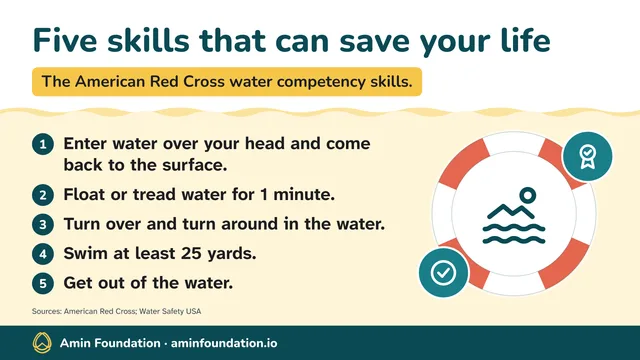
The swimming part is five skills. The Red Cross says to learn to do them in every kind of water you may swim in, from home pools to oceans, lakes and rivers:

  1. Enter water that's over your head, then return to the surface.
  2. Float or tread water for at least 1 minute.
  3. Turn over and turn around in the water.
  4. Swim at least 25 yards.
  5. Exit the water.

Why check?

Many people who say they can swim can't do all five. In a 2020 Red Cross survey (opens in a new tab), 85% of Americans said they could swim, but only 56% of those self-described swimmers could perform all five basic skills. The gap matters most where people overestimate themselves. The AAP notes that teens may overestimate their swimming skills (opens in a new tab) and misjudge hazards, and the National Weather Service warns that swimming in a pool is not the same (opens in a new tab) as swimming at a surf beach with waves, wind and currents.

How this check works

Choose whether you are checking yourself or a child. For each skill, answer honestly: yes in any water you swim in, yes but only in a pool, not yet, or not sure. The tool then shows which skills are in place, which to practise beyond the pool, and which to learn next. It also lists the Red Cross water smarts and helping-others skills, such as swimming sober, never swimming alone, knowing the dangers of holding your breath underwater, and helping safely with "reach or throw, don't go." Your answers stay on this device.

Please don't test these skills alone or in open water. Practise in a pool with a lifeguard or a certified instructor watching.

Skills are one layer

Finishing beginner lessons does not mean a child is water competent, and even competent swimmers need close supervision, says Water Safety USA (opens in a new tab). Life jackets, barriers, supervision and CPR all still count.

For more, read water competency: the 5 skills that can save your life, open-water skills for pool swimmers and learning to swim as an adult.

What you can do today

  1. Answer the five questions for yourself and for each child.
  2. Book a lesson or practice session for any skill marked "not yet" or "not sure." The swim lesson finder links to official lesson finders, including adult learn-to-swim instructors.
  3. Keep track of new skills with the swim progress tracker.

Printables, infographics and games

Printable

Adult Swim Lesson Guide

A one-page guide for adults who want to learn to swim: where to find adult classes, what to ask, the five water competency goals, and staying safe meanwhile.

Infographic

Five skills that can save your life

The American Red Cross water competency skills.

Kids’ game

Swim Skills in Order

Put the five big swim skills in order.

More tools: learn to swim

Sources

  1. Water Safety (opens in a new tab) American Red Cross
  2. Aquatics Centennial Campaign (opens in a new tab) American Red Cross
  3. AAP Releases Updated Drowning Prevention Recommendations (opens in a new tab) American Academy of Pediatrics (HealthyChildren.org)
  4. Know Before You Go in the Water (opens in a new tab) National Weather Service
  5. Water Competency (opens in a new tab) Water Safety USA

Updated