
Free tool · Learn to swim
Swim progress tracker
Mark each skill as it comes, from first floats to swimming 25 yards. Progress is saved only in this browser.
Track your swimmers
Private: what you enter stays on this device.
This is the printable version. Turn on JavaScript to use the interactive tool.
Skills for a child
Skills for an adult
Why track progress?
Learning to swim takes time, and progress can be hard to see from week to week. The American Academy of Pediatrics says you should be able to see gradual but consistent progress (opens in a new tab) once lessons start, and recommends continuing lessons at least until a child masters basic water competency skills. A simple record helps you notice what's going well, what to practise, and when to ask the instructor about the next level.
This tracker works for children and for adults. It is never too late to learn: in a 2023 CDC survey, about 40 million U.S. adults said they don't know how to swim (opens in a new tab).
Where the skills come from
Each skill list is built from official sources:
- First skills for children follow the AAP: parent-and-child classes build basic skills such as back floating, and by about age 4 most children can learn treading water and getting to an exit point. By about age 6, most children in lessons can master the front crawl.
- Safety Around Water is the YMCA (opens in a new tab) program that teaches children two skill sets for an unexpected fall into water: "jump, push, turn, grab" and "swim, float, swim."
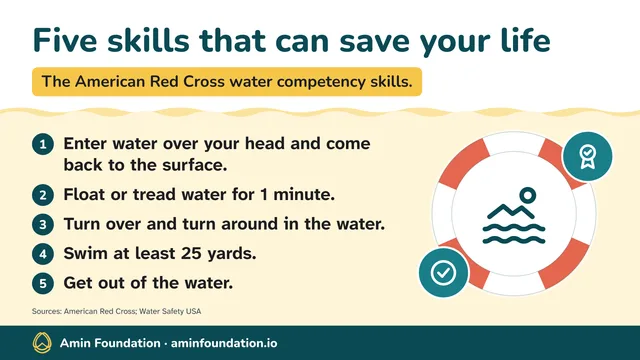
- Water competency is the American Red Cross (opens in a new tab) set of five skills: enter water over your head and return to the surface, float or tread water for at least 1 minute, turn over and turn around, swim at least 25 yards, and exit the water.
- Water smarts are habits the Red Cross and the AAP teach: always ask an adult before getting in, never swim without a lifeguard or Water Watcher, and help others by reaching or throwing, not going in.
- First skills for adults follow the NYC Parks (opens in a new tab) adult classes: breath control, floating and arm strokes.
You can add your own goals too, like "Swims to the deep end" or "Puts face in the water."
How to use the tracker
- Add each swimmer with a name or nickname, and choose the child or adult skill list.
- For each skill, choose Not started, Learning, Can do with help or Can do on their own. The tracker saves the date it changed.
- Add notes, such as lesson days or tips from the instructor, and print a progress sheet to share.
Everything is saved only in this browser, on this device. Nothing is sent to us or anyone else. Clearing your browser data deletes it, so print a copy if you want to keep one.
Skills are not a reason to stop watching
A child who can do every skill on the list still needs close supervision. Water Safety USA (opens in a new tab) says finishing beginner lessons does not mean a child is water competent, and the AAP says lessons don't make children "drown proof." Practise new skills with an instructor or lifeguard present, not alone.
For more, read swim lesson levels explained, how adults can overcome a fear of water and water safety skills by age.
What you can do today
- Add each swimmer in your family and mark where they are now.
- Share the sheet with their instructor and ask what to practise next.
- Check the five skills properly with the water competency check.
Printables, infographics and games
Printable
Adult Swim Lesson Guide
A one-page guide for adults who want to learn to swim: where to find adult classes, what to ask, the five water competency goals, and staying safe meanwhile.
Related guides
- Swim Lesson Levels Explained: From Water Comfort to Strokes
What each swim lesson level teaches, from water comfort to floating, strokes and deep-water safety, using Red Cross and YMCA levels as examples.
- Learning to Swim as an Adult: Where to Start
Never too late to learn to swim. How to find an adult beginner class, what first lessons cover, what to bring, how to practice safely and how to set goals.
- Afraid of the Water? How Adults Can Overcome Fear and Learn to Swim
Fear of water is common, and you can work through it. Gentle steps with a patient instructor, how to talk about your fear, and when to get extra support.
- Water Competency: The 5 Skills That Can Save Your Life
Water competency means the skills to stay safe in water: get in and resurface, float or tread, turn, swim 25 yards and get out. How to check them safely.
- Water Safety Skills by Age: A Milestone Guide
Which water safety habits and swim skills fit each age, from toddlers to teens and adults learning later, based on AAP and Red Cross guidance.
More tools: learn to swim
Sources
- Swim Lessons for Children: When to Start & What to Consider (opens in a new tab) American Academy of Pediatrics (HealthyChildren.org)
- Vital Signs: Drowning Death Rates, Self-Reported Swimming Skill, Swimming Lesson Participation, and Recreational Water Exposure, 2019-2023 (MMWR, 2024) (opens in a new tab) CDC
- Water Safety (Safety Around Water) (opens in a new tab) YMCA of the USA
- Water Safety (opens in a new tab) American Red Cross
- Learn to Swim (opens in a new tab) NYC Parks
- Water Competency (opens in a new tab) Water Safety USA
Updated